

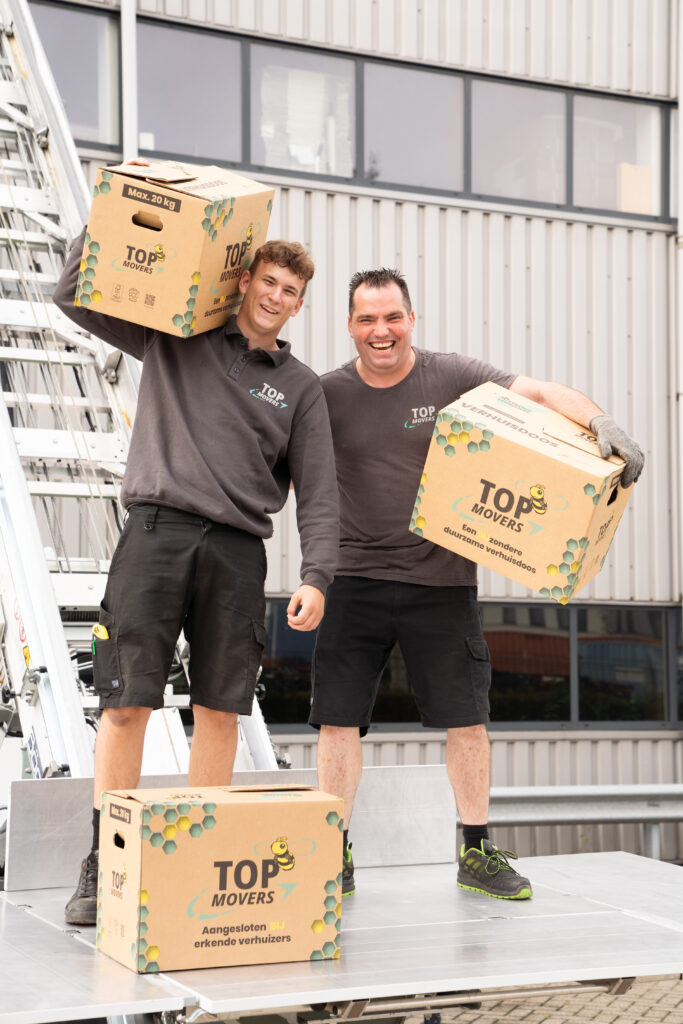
When moving back to the Netherlands, you can choose between a full-service move where a professional moving company handles everything, or coordinating the logistics yourself. For most people moving internationally, a full-service approach is the wisest choice: customs formalities, long-distance transport, and arranging the right documents are more complex than many people anticipate. In this article, we answer the most frequently asked questions about moving back to the Netherlands.
What are the biggest challenges when moving back to the Netherlands?
The biggest challenges when moving back to the Netherlands are customs formalities, arranging the correct transport documents, logistical planning over long distances, and deregistering from foreign authorities in time. Those returning from a country outside the EU will also encounter import duties and exemption schemes that require careful preparation.
Many people underestimate how multifaceted an international return move is. It is not just about moving furniture and boxes, but also about navigating a maze of administrative obligations. Think of deregistering from foreign municipalities, applying for a removal exemption for a car, arranging the right insurance for your household goods in transit, and compiling a complete inventory list.
From popular destinations such as Spain, and specifically the Andalusia region, thousands of Dutch nationals return to their home country every year. They have to deal with Spanish deregistration procedures, European transport regulations, and sometimes the question of what to do with a locally purchased car. The combination of emotional stress and administrative pressure makes a return move more demanding than people expect. Moving is not without reason ranked number two in the top ten most stressful life events, right after the loss of a loved one.
What exactly does a full-service return move to the Netherlands involve?
A full-service return move to the Netherlands means that a moving company takes care of the entire process: from the initial survey and packing of your household goods to transport, customs clearance, unloading, and placing furniture in your new home. You do not need to arrange anything yourself.
With a professional full-service move, every part of the process is carried out by experienced specialists. This begins with a comprehensive inventory list in the desired language, drawing up the required transport documents, and arranging the correct customs paperwork. During transport, your household goods are fully insured and, for international shipments, trackable via track and trace.
In addition to standard transport, we offer supplementary services that make a real difference when returning to the Netherlands:
- Assembly and disassembly service: large pieces of furniture are professionally taken apart before transport and expertly reassembled upon arrival, including video documentation of the existing assembly.
- Handyman service: for disconnecting and reconnecting appliances, hanging lights and curtains, and minor repairs upon arrival.
- Unpacking service: the movers unpack everything and place it exactly where you want it.
- Storage services: if your new home is not yet available, your household goods can be safely stored in our own storage facilities.
- Pet service: for clients with pets, we arrange all necessary documents and preparations for transporting your animal through specialized partners.
We carry out European relocations fully tailored to your specific situation and wishes. As a Royal Warrant Holder and member of international networks such as FIDI and IAM, we apply the highest quality standards.
When is organizing an international return move yourself realistic?
Organizing an international return move yourself is realistic if you have few possessions, do not need to handle customs formalities, and have the time and knowledge to independently coordinate transport, insurance, and administration. For most people with a full household, however, this scenario is not practically feasible.
A self-organized return move works best in a limited number of situations: when you have lived abroad temporarily and are only bringing a few suitcases and boxes, when you are leaving an empty apartment and have already sold your furniture locally, or when you have extensive experience with international logistics and the associated documentation.
As soon as you are dealing with a fully furnished household, a car you want to bring along, or a move from a country outside the EU, the complexity increases significantly. At that point, matters such as customs declarations, removal exemptions, and the right insurance coverage are no longer minor details, but crucial steps that, if handled incorrectly, can cause considerable costs or delays.
What are the hidden costs of organizing an international move yourself?
The hidden costs of organizing an international move yourself include higher insurance costs, fines for incorrect customs declarations, additional transport costs due to logistical errors, and the costs of lost or damaged goods without adequate coverage. Together, these costs can easily exceed the apparent savings.
Many people only compare direct transport costs and conclude that doing it yourself is cheaper. But the real costs are broader:
- Insurance: a private individual who organizes their own transport often has no or insufficient coverage for damage to household goods in transit. A professional moving company arranges this as standard.
- Customs errors: an incorrect declaration or a missing document can lead to delays, storage at the importer’s expense, or a fine from the tax authorities.
- Shuttle costs: in situations where a large truck cannot reach the final destination, a shuttle solution is required. If you have not arranged this in advance, you will pay extra.
- Loss of time: coordinating an international move takes dozens of hours of research, phone calls, and administration. That time has a real value.
- Damage to furniture: without professional disassembly and packaging, the risk of damage to large pieces of furniture is considerably higher.
When moving back from Spain, car importation also plays a role. Those who bring a vehicle registered in Spain to the Netherlands can avoid high taxes through a BPM exemption, but only if the application is submitted correctly and on time. An error in this process can cost thousands of euros.
Does an employer reimburse the costs of a full-service return move?
Yes, many employers reimburse the costs of a full-service return move to the Netherlands, especially when the employee was originally posted abroad by the employer. The reimbursement is often provided through a relocation budget or relocation allowance and in many cases covers the full cost of the full-service move.
A large proportion of people who move internationally do so in the context of work. Organizations such as ASML, Airbus, or the Ministry of Foreign Affairs send employees around the world and expect a smooth relocation process upon their return. The employer makes a budget available for this, sometimes including coordination by a relocation service.
If your employer is reimbursing the move, it is wise to discuss in advance which services are covered by the budget. Full-service moves, including packing, transport, customs clearance, and assembly, are covered by most reimbursement schemes. Additional services such as pet service or storage services can sometimes be requested separately.
Do you have a relocation budget from your employer but are not entirely sure what it covers? Our move coordinators are happy to think along with you about what is possible within your situation.
How do you choose a reliable moving company for your return to the Netherlands?
You can recognize a reliable moving company for an international return move by accredited certifications such as FIDI or IAM, in-house customs declarants, a transparent way of working, and demonstrable experience with the specific route you are taking. Always choose an accredited mover, not an unspecialized transporter.
When choosing a moving company for your return to the Netherlands, these are the most important criteria:
- International certifications: membership of FIDI or IAM guarantees that the company meets strict international quality and safety standards.
- In-house customs declarants: a company with its own customs declarants can handle all administration internally, without dependence on third parties.
- Knowledge of your specific route: a moving company with an office in your country or region of departure knows the local regulations and practical challenges from the inside.
- Own fleet and storage facilities: this provides assurance about the quality of transport and temporary storage, without unexpected intermediaries.
- Track and trace: with an international move, you want to know where your household goods are. A professional company offers this as standard.
- Transparent quotation: a reliable company provides a clear overview of all costs in advance, with no surprises afterwards.
We carry out worldwide relocations from the Port of Rotterdam, with our own fleet, our own storage facilities, and our own customs declarants. With more than 100 years of experience and an office in Malaga for the Andalusia–Netherlands route, we know exactly what a return move requires. As a fourth-generation family business and Royal Warrant Holder, trust and quality are at the heart of what we do, not the lowest price.
Veelgestelde vragen
Hoe ver van tevoren moet ik beginnen met de planning van mijn terugverhuizing naar Nederland?
Voor een full-service terugverhuizing vanuit Europa raden wij aan om minimaal 6 tot 8 weken van tevoren contact op te nemen met een verhuisbedrijf. Komt u terug vanuit een land buiten de EU, plan dan rekening met 10 tot 12 weken, omdat douanedocumentatie, vrijstellingsaanvragen en transportplanning meer tijd vergen. Hoe eerder u begint, hoe meer ruimte er is om alles zorgvuldig voor te bereiden en onverwachte vertragingen op te vangen.
Wat moet ik regelen bij de Spaanse (of andere buitenlandse) gemeente voordat ik vertrek?
Voordat u vertrekt, dient u zich uit te schrijven bij het lokale bevolkingsregister, ook wel het ‘padrón municipal’ in Spanje. Daarnaast is het verstandig om uw Spaanse bankrekening af te wikkelen, lopende abonnementen op te zeggen en eventuele lokale belastingverplichtingen af te ronden. Bewaar alle uitschrijvingsbewijzen zorgvuldig, want deze documenten kunnen nodig zijn voor de Nederlandse inschrijving bij uw nieuwe gemeente en voor douaneformaliteiten onderweg.
Kan ik mijn in Spanje gekochte auto meenemen naar Nederland zonder extra belasting te betalen?
Ja, dat is mogelijk via een BPM-vrijstelling (verhuisboedelvrijstelling), maar alleen als u aan specifieke voorwaarden voldoet: u moet de auto minimaal zes maanden vóór de verhuizing in uw bezit hebben gehad en het voertuig moet aantoonbaar voor persoonlijk gebruik zijn geweest. De aanvraag moet correct en tijdig worden ingediend bij de Belastingdienst, vóórdat het voertuig Nederland binnenkomt. Een fout in dit proces kan leiden tot een volledige BPM-aanslag van soms duizenden euro’s, dus laat u hierover goed adviseren.
Wat gebeurt er met mijn inboedel als mijn nieuwe woning in Nederland nog niet beschikbaar is op het moment van aankomst?
In dat geval biedt een professioneel verhuisbedrijf opslagdiensten aan in eigen, beveiligde opslagfaciliteiten. Uw inboedel wordt veilig opgeslagen totdat uw nieuwe woning beschikbaar is, waarna de levering en plaatsing alsnog volledig worden uitgevoerd. Het is belangrijk om dit vooraf te bespreken en vast te leggen in uw verhuisovereenkomst, zodat er geen onduidelijkheid bestaat over de opslagkosten en de beoogde levertermijn.
Zijn mijn spullen tijdens het transport verzekerd en wat dekt die verzekering precies?
Bij een full-service verhuizing via een erkend verhuisbedrijf is uw inboedel standaard verzekerd tijdens het transport. De dekking omvat doorgaans schade als gevolg van ongelukken, brand of diefstal, maar de exacte voorwaarden kunnen per bedrijf en per polis verschillen. Vraag vooraf altijd naar de verzekeringswaarde, het eigen risico en de procedure voor het indienen van een schadeclaim, zodat u precies weet waar u aan toe bent.
Wat zijn veelgemaakte fouten bij het zelf samenstellen van de inventarisatielijst voor de douane?
Een veelgemaakte fout is het gebruik van vage omschrijvingen zoals ‘diversen’ of ‘keukenspullen’ in plaats van specifieke, gedetailleerde beschrijvingen per item inclusief geschatte waarde. Ook het ontbreken van serienummers bij elektronica of het niet vermelden van antieke of waardevolle stukken kan leiden tot vertraging of extra controles aan de grens. Een professioneel verhuisbedrijf met eigen douanedeclaranten stelt deze lijst voor u op en zorgt dat deze voldoet aan alle wettelijke vereisten.
Kan ik ook gebruikmaken van een full-service verhuizing als ik niet door een werkgever word uitgezonden maar zelf terugkeer naar Nederland?
Absoluut. Full-service verhuizingen zijn niet exclusief voor expats die door een werkgever worden uitgezonden. Ook als u op eigen initiatief terugkeert naar Nederland, kunt u gebruikmaken van het volledige dienstenpakket, van inpakken en transport tot douaneafhandeling en montage op de nieuwe locatie. Een verhuisbedrijf stelt samen met u een offerte op die is afgestemd op uw specifieke situatie en budget, zodat u precies weet wat u kunt verwachten.
Gerelateerde artikelen
- Retiring back to the Netherlands: how do you choose the right moving partner?
- How to move abroad with pets: what does a removal company arrange?
- Wat betekent volledige ontzorging bij een bedrijfsverhuizing?
- How do you transport your car when moving back from Spain to the Netherlands?
- Wat zijn de aandachtspunten bij het verhuizen van een laboratorium?
- What documents do you need to emigrate to Spain?
- Social return bij aanbestedingen: hoe weeg je dit mee bij het kiezen van een verhuisbedrijf?
- Hoe plan je een bedrijfsverhuizing zonder bedrijfsonderbreking?
- Hoe verplaats je zware machines tijdens een bedrijfsverhuizing?
- Wat zijn de fiscale gevolgen van terugverhuizen naar Nederland vanuit Spanje?
- Hoeveel verhuiskostenvergoeding is gebruikelijk bij een internationale verhuizing?
- Wat is het verschil tussen een erkend en niet-erkend verhuisbedrijf?
- Zijn er beperkingen op wat je mag meenemen bij een internationale verhuizing?
- Hoe regel je een retourverhuizing vanuit het buitenland terug naar Nederland?
- Hoe lang duurt een verhuizing van Nederland naar Spanje?