
The Dutch truck toll is a kilometre charge for heavy goods vehicles that will start on 1 July 2026, replacing the old Eurovignette. Transport and logistics companies pay per kilometre driven, with zero-emission trucks paying a much lower rate. For transport and logistics companies, it means higher costs per trip, new planning choices, and a stronger reason to go electric. Below, we answer the most common questions.
How does the Dutch truck toll actually work?
The Dutch truck toll, or vrachtwagenheffing, is a kilometre charge for heavy goods vehicles on Dutch roads. Instead of a fixed annual fee, you pay for the distance you drive. The charge depends on the vehicle’s weight, its emission class, and whether it produces zero emissions.
The government will introduce the charge on 1 July 2026 and replace the Eurovignette, the fixed fee that foreign and Dutch operators paid in the past. The rates are meant to reflect actual road use and the pollution a vehicle causes. Cleaner trucks pay less, and older diesel trucks pay more.
Operators need an on-board unit or a compatible tracking system that registers kilometres driven. You pay based on that registration, so accurate trip data becomes part of your daily administration. Check the official government and RDW communications for the latest tariff tables, because details can still change.
Which trucks and companies are affected by the toll?
The toll applies to heavy goods vehicles, in general trucks above 3,500 kilograms, driven on Dutch public roads. Both Dutch and foreign operators pay, so the charge covers local distribution, port traffic around Rotterdam, and long-distance freight alike.
Every company that runs its own trucks falls under the scheme. That includes:
- Transport companies that haul freight for others
- Logistics providers with their own vehicle fleet
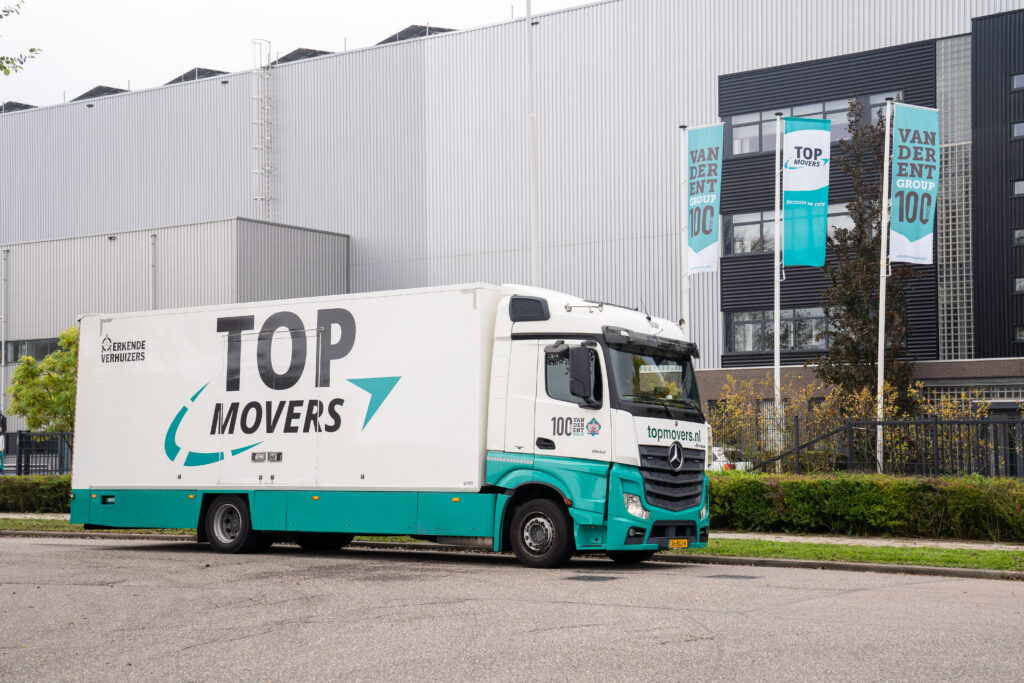
- Moving companies that use heavy moving trucks
- Industrial and port businesses with their own distribution fleet
Lighter delivery vans below the weight threshold fall outside the heavy goods scheme. This makes vehicle choice and route planning more relevant than before, especially for companies that mix van and truck deliveries.
How much will the truck toll add to transport costs?
The truck toll adds a variable cost per kilometre, so the impact depends on how many kilometres you drive, the weight class of your trucks, and their emission class. Diesel trucks pay the highest rate, while zero-emission trucks pay a much lower rate. High-mileage operators will feel it most.
Because the charge scales with distance, it hits companies with long routes and many trips the hardest. A fleet that drives few kilometres in a dense area pays less than one that crosses the country daily. We recommend running your own numbers with your actual annual kilometres per vehicle instead of relying on averages.
Expect the toll to show up as a separate line in your cost price calculations. Many transport companies will pass at least part of it on to customers, either as a surcharge or as part of updated rates. Transparent communication about this helps keep long-term relationships intact.
What does the truck toll mean for moving and logistics customers?
For customers, the truck toll can lead to slightly higher transport rates or a separate toll surcharge on invoices. The effect per move or delivery is usually modest, but it adds up for companies with frequent shipments. It also rewards suppliers who use cleaner vehicles.
If you are a facility manager planning an office relocation, the toll is one more cost factor next to labour, materials, and storage. Office relocation costs depend mostly on volume, complexity, and planning. The toll becomes a small part of that picture, especially for local moves with short distances.
Ask your moving partner how they handle the toll in their quotes. A clear quote shows whether the charge is included or listed separately. Also ask about the vehicles they use, because emission class directly affects the toll rate. Under CSRD reporting rules, the transport emissions of your suppliers also matter for your own sustainability reporting.
How can transport companies prepare for the truck toll?
Transport companies prepare best by mapping their fleet, kilometres, and routes now, then adjusting prices and vehicle choices before the toll starts. Early preparation prevents surprises in your margins and gives you time to talk to customers.
Take these steps:
- Analyse your fleet. List every truck with its weight class, emission class, and annual kilometres.
- Calculate your exposure. Estimate the extra yearly cost per vehicle and for the whole fleet.
- Adjust your pricing. Decide how to include the toll in quotes and contracts, and update terms where needed.
- Optimise routes. Combine trips, avoid empty kilometres, and plan loads more efficiently.
- Check your systems. Make sure on-board units and administration work with the toll registration.
- Plan your fleet renewal. Compare the toll savings of zero-emission trucks with their purchase and charging costs.
Talk to your accountant and fleet supplier early. Financing options, subsidies, and depreciation rules for electric trucks can change the business case significantly.
Will the toll speed up the shift to sustainable logistics?
Yes, the truck toll gives companies a financial reason to switch to zero-emission trucks, because clean vehicles pay a lower rate than diesel trucks. Combined with CSRD reporting duties and customer demand, it pushes the sector towards electric transport faster than before.
The toll works alongside other pressures. Large companies must report on their value chain emissions, and they increasingly ask transport partners for proof of lower emissions. A zero-emission fleet helps you answer those questions and strengthens your position in tenders.
Challenges remain. Electric trucks cost more to buy, charging infrastructure is still growing, and range matters for long routes. For urban and regional work, such as city distribution and office moves, electric trucks already work well in practice. That makes the last mile the logical place to start.
Hoe Van der Ent helpt met wetswijzigingen
Wetswijzigingen zoals de vrachtwagenheffing brengen extra vragen met zich mee, zeker als je een kantoorverhuizing plant en tegelijk met CSRD-verplichtingen te maken hebt. Wij helpen je om hier rustig en voorbereid mee om te gaan, zodat je niet voor verrassingen komt te staan.
Dit kun je van ons verwachten:
- Zero-emissietransport met elektrische vrachtwagens, zodat je verhuizing past binnen je duurzaamheidsdoelen
- Ondersteuning bij CSRD-rapportage met inzicht in de emissies van je verhuizing
- Een meubelpaspoort via Circular Connect, zodat je ziet wat je kunt hergebruiken
- Een duidelijke offerte waarin je ziet welke kosten erin zitten
- Een volledig ontzorgende aanpak met verhuisregie, opslag en handymanservices
Als erkend verhuizer en hofleverancier met meer dan 100 jaar ervaring, ISO 14001- en VCA-gecertificeerd, werken we al jaren aan duurzaam vervoer. Plan je een kantoorverhuizing? Neem contact met ons op voor een vrijblijvend gesprek, dan kijken we samen naar wat voor jullie organisatie werkt.
Veelgestelde vragen
How do I calculate my fleet's expected truck toll costs before July 2026?
Start with a simple spreadsheet listing every truck, its weight class, emission class, and the kilometres it drives on Dutch roads per year. Multiply those kilometres by the applicable per-kilometre rate from the official tariff tables published by the government and RDW. Run a second scenario in which some diesel trucks are replaced by zero-emission models to see how much the lower rate could save you.
What should I do first if I haven't started preparing for the truck toll yet?
Begin with a fleet and kilometre analysis, because every other decision (pricing, routes, vehicle renewal) depends on it. Next, check with your on-board unit or telematics supplier whether your current system can register kilometres for the toll. Finally, put a first draft of your toll surcharge or updated rate structure on paper so you can discuss it with customers well before 1 July 2026.
Should I include the truck toll in my rates or charge it as a separate surcharge?
Both approaches work, but a separate toll line is often easier to explain and to adjust if tariffs change. A fixed rate increase is simpler for customers but leaves you exposed if your actual kilometres differ from your estimate. Whichever you choose, update your contract terms and quotes in advance and explain the calculation clearly, so customers don’t see it as a surprise price hike.
What if my customers refuse to pay the toll surcharge?
Open the conversation early and use data: show how the toll is calculated, how many kilometres their work involves, and what the charge per shipment or move would be. Offer alternatives such as consolidated deliveries, fewer trips, or zero-emission transport, which carries a lower toll rate. Including a toll clause in new contracts and renewals helps you avoid disputes later.
How can I reduce toll costs without replacing my whole fleet?
Focus on cutting unnecessary kilometres: combine trips, reduce empty runs, improve load planning, and use route-planning software to shorten distances. You can also assign your cleanest vehicles to the highest-mileage routes, since they pay the lowest rate where it matters most. Replacing just a few high-mileage diesel trucks often delivers more savings than a gradual renewal across the entire fleet.
Are electric trucks already a realistic option for regional and urban transport?
Yes, for city distribution, regional routes, and office moves, electric trucks already work well in practice because daily distances are predictable and trucks can charge overnight at the depot. For long-distance routes, range and charging infrastructure are still limiting factors. Start with a pilot on your most suitable routes, and check financing options, subsidies, and depreciation rules with your accountant to build a solid business case.
What should I ask my moving or logistics partner about the truck toll?
Ask whether the toll is included in the quote or listed separately, and which vehicles and emission classes they will use for your job. Also ask whether they can provide emission data for your move, since this helps with your CSRD reporting on value chain emissions. A partner with a zero-emission fleet can often limit the toll impact and give you clearer sustainability figures.
Gerelateerde artikelen
- Nieuwe regels voor overuren: wat betekenen ze voor werkgevers in de transportsector?
- Hoe weeg je prijs versus kwaliteit bij een zakelijke verhuizing?
- Wat zijn veelgemaakte fouten bij een bedrijfsverhuizing?
- What are the benefits of a phased office relocation?
- How do you assess the reliability of a removal company for your business?
- De ultieme checklist voor het kiezen van een zakelijk verhuisbedrijf
- What forms do you need for customs when moving abroad?
- Wat zijn de gevolgen van een bedrijfsverhuizing voor je bedrijfsadres?
- Bedrijfsarchief uitbesteden: wat zijn je opties en waar let je op?
- Kan een bedrijfsverhuizing negatieve gevolgen hebben voor klantrelaties?
- Wat houdt een corporate relocation in bij een internationale overplaatsing?
- Hoe wordt een inboedel naar het buitenland vervoerd?
- Moet een verhuisbedrijf gecertificeerd zijn voor internationale verhuizingen?
- Zijn er beperkingen op wat je mag meenemen bij een internationale verhuizing?
- Hoe vervoer je een auto bij een internationale verhuizing?