

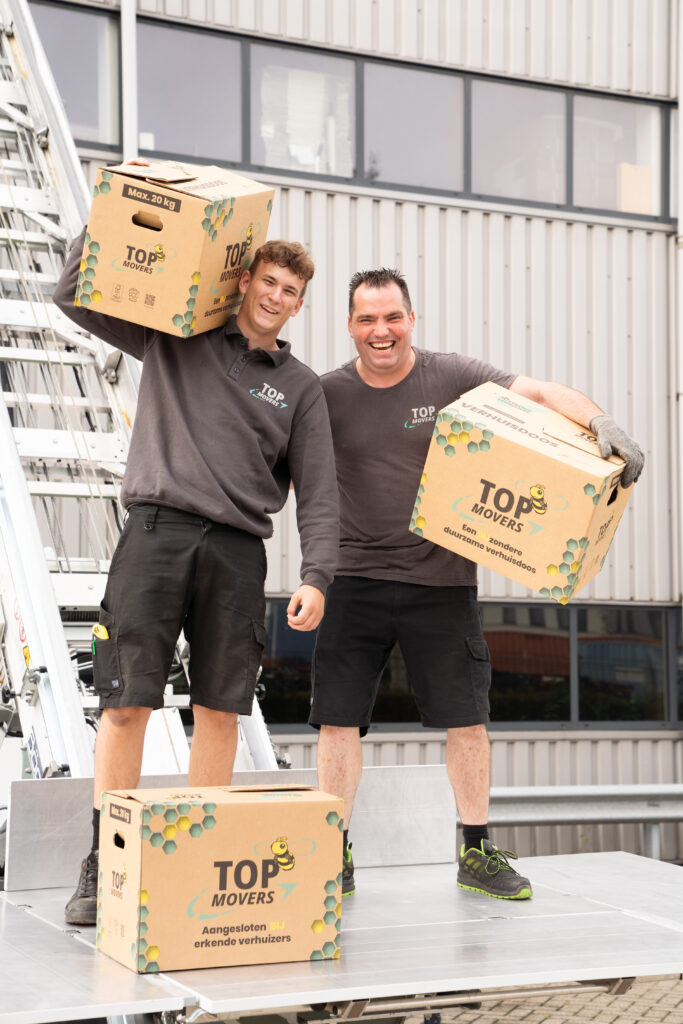
A reliable moving company for your business can be recognised by demonstrable certifications, a transparent contract, relevant experience with office relocations, and a clear approach to sustainability. For facility managers and office managers, the choice of a moving partner is no trivial matter: a failed business relocation costs time, money, and productivity. In this article, we answer the most frequently asked questions so you can make a well-informed decision.
What certifications should a reliable moving company have?
A reliable moving company for business clients holds at minimum the recognition as Erkend Projectverhuizer (EPV), a VCA certification for safe working practices, and preferably ISO 9001 for quality management and ISO 14001 for environmental management. These certifications are not a formality: they prove that a company structurally meets professional and safety standards.
The EPV recognition is specific to the moving industry and demonstrates that a company meets stringent requirements in terms of craftsmanship, equipment, and customer focus. VCA stands for Safety, Health and Environment Checklist Contractors and is a hard requirement in many sectors, including the petrochemical industry and the Port of Rotterdam, when tendering. ISO 9001 safeguards process quality, while ISO 14001 shows that a moving company takes its environmental impact seriously.
In addition to these basic requirements, it is a plus if a moving company is affiliated with recognised industry networks such as Top Movers Nederland, FIDI, or IAM. These networks impose additional requirements on their members and provide access to international collaboration. At Van der Ent Group, we are members of all these networks and hold all the certifications mentioned, supplemented by our status as Royal Warrant Holder.
How do you check the reputation of a moving company?
You check the reputation of a moving company by reading reviews on independent platforms, requesting references from comparable business clients, and looking at the demonstrable client base. A company that works for large or well-known organisations and is willing to provide references generally has something to prove.
When reading reviews, pay attention not only to the rating but also to how the company responds to criticism. A professional and constructive response to a negative review says more than ten flawless testimonials. During a quote consultation, also actively ask for references in your sector: a moving company with experience in the manufacturing industry or the port sector better understands the specific challenges involved.
Additionally, check whether the company is present in industry associations and whether its certifications are current. Outdated or expired certifications are a warning sign. A long track record, such as more than 100 years of activity in the market, is in itself a reputation indicator: a company that has served clients across four generations has repeatedly demonstrated its reliability.
What should a reliable moving contract for businesses contain?
A reliable moving contract for businesses contains a detailed description of the work, a clear pricing agreement, arrangements regarding liability and insurance, a schedule with milestones, and a provision for unforeseen circumstances. If these elements are missing, you as the client run unnecessary risks.
Specifically for a business relocation, the following contract elements are essential:
- Accurate inventory: what exactly is being moved, including sensitive equipment, archives, and office furniture.
- Liability arrangement: who is responsible in the event of damage, and up to what amount is the mover insured.
- Schedule and deadlines: concrete dates for dismantling, transport, and delivery at the new location.
- Agreements on additional work: what happens if the move requires more time or resources than anticipated.
- Sustainability agreements: increasingly relevant for CSRD reporting, such as CO2 registration and waste processing.
A moving company that works with a comprehensive moving checklist and a dedicated project coordinator gives you as a facility manager control over the process. Always ask for the general terms and conditions and check whether the company is affiliated with a recognised industry association that sets codes of conduct.
Why is experience with office relocations a separate requirement?
Experience with office relocations is a separate requirement because a business move fundamentally differs from a residential move. It involves the continuity of business processes, the security of IT infrastructure, coordination with multiple stakeholders, and compliance with safety protocols at complex locations.
An office relocation often takes place outside business hours to safeguard business continuity. This requires a moving partner accustomed to working under time pressure, with specific access requirements and in collaboration with IT administrators, facility services, and sometimes external contractors. Experience in sectors such as the petrochemical industry or the Port of Rotterdam adds an additional layer: safety briefings, VCA passes, and access protocols are the norm there.
Moreover, moving sensitive equipment, server racks, or specialised machinery requires different expertise than moving desks and cabinets. A moving company without demonstrable experience in business relocations lacks the knowledge to manage these risks. Therefore, always ask for reference projects comparable to your situation, both in terms of scale and sector.
How do you assess whether a moving company works sustainably?
You assess whether a moving company works sustainably by looking at concrete measures: does the company operate electric vehicles, does it hold an ISO 14001 certification, does it work with reusable moving materials, and can it register and report CO2 emissions? Sustainability claims without substantiation are mere marketing talk.
For companies falling under CSRD regulations, this is no longer a trivial matter. As a client, you need demonstrable data on the environmental impact of your relocation. A moving company that supports you in this regard offers genuine added value. Concrete indicators to look out for:
- Electric fleet: does the company operate emission-free vehicles for the last mile?
- Reusable materials: are moving boxes reused or are they for single use?
- CO2 reporting: can the company provide insight into the emissions of your move?
- Circular approach: is there attention to the reuse of office furniture, for example via a furniture passport?
- Sustainability certification: does the company hold ISO 14001 or does it work with the CO2 Performance Ladder?
At Van der Ent Group, we work with electric trucks, 680 solar panels on our head office, and moving boxes made from recyclable ABS plastic with an average lifespan of one thousand moves. Through our subsidiary Circular Connect, we also offer a furniture passport, which maps the lifecycle of office furniture for reuse and CSRD reporting.
What questions do you ask when requesting a quote for an office relocation?
When requesting a quote for an office relocation, you ask questions about certifications, experience in your sector, the approach to project coordination, insurance in case of damage, sustainability measures, and how the company handles unforeseen circumstances. A good quote starts with good questions.
Use the following list as a guide in your conversation with a potential moving partner:
- What certifications do you hold, and are they current? (EPV, VCA, ISO 9001, ISO 14001)
- Do you have experience with relocations in our sector or of a comparable scale?
- Who will be our dedicated point of contact and project manager during the move?
- How do you handle sensitive equipment or archives?
- What is your liability arrangement in the event of damage, and are you fully insured?
- Can you register and report CO2 emissions for our sustainability accountability?
- Do you offer additional services such as handyman service, cable management, or temporary storage?
- How is the move planned and how do you communicate in the event of deviations?
A moving company that answers these questions without hesitation and can provide concrete documentation radiates professionalism and transparency. Be cautious with parties that give vague answers or are unwilling to share references. For a business relocation, the choice of the right partner is decisive for the success of your entire project.
Veelgestelde vragen
Hoe vroeg voor de verhuisdatum moet ik een verhuisbedrijf inschakelen?
Voor een kantoorverhuizing van gemiddelde omvang is het verstandig om minimaal drie tot zes maanden van tevoren te beginnen met het selecteren van een verhuispartner. Grotere of complexere verhuizingen — denk aan meerdere verdiepingen, gespecialiseerde apparatuur of strenge toegangsprotocollen — vragen soms wel zes tot twaalf maanden voorbereiding. Hoe eerder je start, hoe meer ruimte er is voor een gedegen inventarisatie, een realistisch projectplan en eventuele aanpassingen aan de planning.
Wat zijn de meest voorkomende fouten die bedrijven maken bij het kiezen van een verhuispartner?
De meest gemaakte fout is kiezen op basis van prijs alleen, zonder te letten op certificeringen, ervaring of contractinhoud. Andere veelvoorkomende fouten zijn: geen referenties opvragen, geen vaste projectcoördinator afspreken en de verhuizing te laat inplannen waardoor er tijdsdruk ontstaat. Ook het ontbreken van duidelijke afspraken over aansprakelijkheid en meerwerk leidt achteraf tot onaangename verrassingen en extra kosten.
Hoe zorg ik ervoor dat mijn medewerkers zo min mogelijk hinder ondervinden van de verhuizing?
Communiceer tijdig en transparant met je medewerkers over de planning, de verwachte impact en hun eigen rol in het proces — zoals het inpakken van persoonlijke spullen. Plan de zwaarste verhuisactiviteiten buiten kantooruren of in het weekend, en stel een intern aanspreekpunt aan dat samenwerkt met de projectcoördinator van het verhuisbedrijf. Een gedetailleerde verhuischecklist per afdeling helpt om het proces gestructureerd en voorspelbaar te houden voor iedereen.
Kan een verhuisbedrijf ook helpen bij de verhuizing van serverruimtes en IT-infrastructuur?
Ja, maar niet elk verhuisbedrijf heeft de specifieke expertise die hiervoor nodig is. Vraag expliciet of het bedrijf ervaring heeft met het verplaatsen van serverracks, UPS-systemen en andere gevoelige IT-apparatuur, en of zij samenwerken met gecertificeerde IT-specialisten. Goede afspraken over wie verantwoordelijk is voor de demontage, het transport en de herinstallatie van IT-componenten zijn essentieel — leg dit altijd schriftelijk vast in het contract.
Wat als er tijdens de verhuizing schade ontstaat aan apparatuur of inventaris?
Een professioneel verhuisbedrijf is verzekerd voor transportschade en legt in het contract vast tot welk bedrag de aansprakelijkheid geldt. Controleer vóór ondertekening of de verzekeringsdekking toereikend is voor de waarde van jouw inventaris, inclusief gevoelige apparatuur. Documenteer de staat van waardevolle items vóór de verhuizing met foto’s, en meld eventuele schade direct bij oplevering — wacht hier niet mee, want veel verzekeringen hanteren korte meldingstermijnen.
Biedt een professioneel verhuisbedrijf ook tijdelijke opslagmogelijkheden als de nieuwe locatie nog niet klaar is?
Veel professionele verhuisbedrijven bieden inderdaad tijdelijke opslagoplossingen aan, zoals beveiligde magazijnruimte of mobiele opslagcontainers. Dit is met name handig als er een gat zit tussen de oplevering van de oude en de nieuwe locatie, of als een verbouwing uitloopt. Vraag bij de offerteaanvraag naar de beschikbare opslagcapaciteit, de beveiliging van de opslagruimte en de kosten per week of maand, zodat je niet voor verrassingen komt te staan.
Hoe gebruik ik de verhuisgegevens van mijn verhuisbedrijf voor mijn CSRD-rapportage?
Vraag je verhuisbedrijf om een gedetailleerd CO2-rapport van de uitgevoerde verhuizing, inclusief brandstofverbruik, gereden kilometers en eventuele emissiecompensatiemaatregelen. Dit rapport kun je opnemen in je Scope 3-emissieregistratie, die onderdeel uitmaakt van de CSRD-verslaglegging. Kies bij voorkeur een verhuispartner die werkt met een erkende meetmethodiek, zoals de CO2-prestatieladder, zodat de gegevens aansluiten bij de eisen van je duurzaamheidsrapportage.
Gerelateerde artikelen
- How do you assess the social return policy of a removal company?
- Retiring back to the Netherlands: how do you choose the right moving partner?
- Hoe werkt een full-service verhuis- en opslagbedrijf voor kantoren?
- Kantoorverhuizing checklist: zo voorkom je kabelchaos op je nieuwe locatie
- What are the tax consequences of moving back to the Netherlands from Spain?
- Hoe minimaliseer je stress bij een bedrijfsverhuizing?
- Wat zijn de aandachtspunten bij het verhuizen van een laboratorium?
- Hoe werkt een bedrijfsverhuizing als je een franchise hebt?
- Wat moet je regelen voor de verzekering van je nieuwe bedrijfspand?
- Hoe werkt een bedrijfsverhuizing als je een eigen pand hebt?
- Wat zijn veelgemaakte fouten bij het terugverhuizen vanuit Spanje naar Nederland?
- Wat is het verschil tussen een relocation package en een verhuiskostenvergoeding?
- Wat is het verschil tussen een verhuizing binnen Europa en buiten Europa?
- Kan ik mijn auto meenemen als ik naar het buitenland verhuis?
- Hoe lang mag je inboedel bij de douane staan voordat je extra kosten betaalt?