

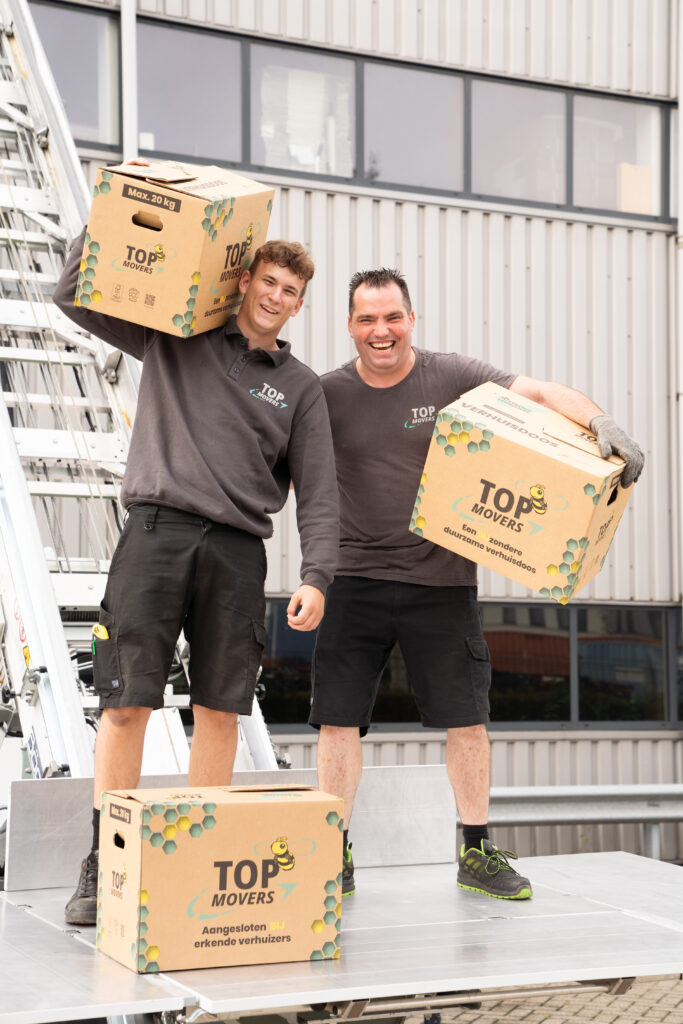
Not all moving companies assist with a furniture passport, but a growing number of circular moving partners do. Moving companies that actively focus on circularity, such as Van der Ent Group through its subsidiary Circular Connect, systematically register office furniture in a furniture passport so that companies gain insight into reuse, residual value, and sustainable disposal. For facility managers and project managers planning a business relocation while also wanting to substantiate their CSRD reporting, this is a concrete and valuable part of the moving service. In this article, we answer the most frequently asked questions about furniture passports and circular relocations.
What does a furniture passport register exactly?
A furniture passport is a digital document that records the identity, condition, and life cycle of each individual piece of furniture. It registers at minimum the type of furniture, the material, the age, the current condition, and the reuse possibilities. This creates a complete overview of the office furniture that becomes available during a relocation and what can be done with it.
In practice, a furniture passport contains information such as:
- Brand, model, and year of purchase of the furniture item
- Material composition (relevant for recycling or refurbishment)
- Current condition and residual value
- Recommended next destination: reuse, refurbishment, recycling, or responsible disposal
- Location and quantity per category
This overview is not only useful for the relocation itself. It also provides an organisation with the documentation needed for sustainability reporting. Facility managers can use the data from a furniture passport to demonstrate how much office furniture has been given a second life, which directly contributes to CSRD accountability. We compile this passport as part of our circular relocation services, so it is not an additional burden but a natural part of the process.
How does a furniture passport fit within a circular business strategy?
A furniture passport fits within a circular business strategy because it lays the foundation for conscious decisions about furniture. Without insight into what exists, in what condition, and of what material, reuse is virtually impossible to organise. The passport makes the inventory visible and manageable, and connects the relocation to the broader sustainability objectives of the organisation.
Circularity is about keeping materials in the loop for as long as possible. An office relocation is one of the moments when this can be made concrete. Furniture that would otherwise be disposed of is given a documented opportunity for redeployment within the organisation itself, resale, donation to a social institution, or professional refurbishment through a furniture passport.
For companies working on their sustainability strategy, this is also a matter of measurability. CSRD regulations increasingly require organisations to report on their impact on the environment and use of raw materials. A furniture passport delivers demonstrable data: how many kilograms of material were reused, how much CO2 emissions were avoided, what percentage of the inventory was processed circularly. These are not abstract claims but concrete figures.
What is the difference between a circular and a regular moving company?
The most important difference is that a circular moving company actively contributes to the reuse and life extension of furniture and materials, while a regular moving company limits itself to physically moving items from A to B. A circular moving company thinks along about what happens to the inventory before, during, and after the relocation.
In concrete terms, circular moving companies distinguish themselves on the following points:
- Inventory and furniture passport: systematic registration of office furniture as the starting point of the relocation
- Reuse advice: actively thinking about which furniture can be redeployed, sold, or refurbished
- Network for distribution: contacts with parties that purchase or process second-hand office furniture
- Low-emission transport: use of electric vehicles or other forms of cleaner transport
- Sustainability reporting: support in documenting the circular results
A regular moving company typically does not offer these services. That does not mean regular movers do not provide good service, but for organisations that take circularity seriously, the choice of a specialised partner is decisive for the outcome.
What services does a moving company offer around furniture passports?
A moving company that works with furniture passports typically offers a package of services that begins with the inventory and continues through to processing and reporting. The core is that the furniture passport does not stand alone, but is part of a broader circular relocation approach.
Typical services surrounding a furniture passport are:
- Pre-survey and inventory: a detailed assessment of all furniture items on location, including condition and material
- Compiling the furniture passport: digital recording per category or per item, depending on the scale
- Tailored reuse advice: which furniture goes to the new location, what is redeployed, and what deserves a different destination
- Furniture refurbishment: professional restoration of usable items so they last longer
- Circular disposal: responsible processing of furniture that cannot be reused
- Sustainability reporting: an overview of the circular results, usable for internal reporting or CSRD accountability
We offer these services through Circular Connect, our initiative for circular relocations. In addition to the furniture passport and the relocation itself, we also provide handyman service at the new location, so the workplace is immediately ready for use. For organisations that also want to arrange their archive or furniture storage, we additionally offer household storage.
What should you look for when choosing a circular moving partner?
When choosing a circular moving partner, look at three things: demonstrable experience with furniture passports and circularity, the presence of a concrete network for reuse, and the capacity to document the results for reporting purposes. Fine promises are not enough; always ask for concrete working methods and references.
More specifically, these are the criteria that make the difference:
- Certifications: look for ISO 14001 (environmental management system), VCA, and recognitions such as Erkend Projectverhuizer. These certifications are not a guarantee of circularity, but a baseline quality level.
- Own network for reuse: does the moving company itself have contacts or partnerships for the distribution of second-hand furniture, or does it merely refer you elsewhere?
- Experience with CSRD support: can the partner translate the circular results into usable data for your sustainability reporting?
- Low-emission transport: does the company operate electric vehicles or take measures to limit the CO2 emissions of the relocation?
- Transparency about the process: a reliable partner explains in advance how the furniture passport is compiled, who does what, and how the results are reported back.
For facility managers and project managers in the business market, it is also relevant whether the moving partner has experience with complex environments, such as the petrochemical industry or the Port of Rotterdam. A partner with broad business relocation experience understands that a corporate relocation is more than moving boxes. It is about continuity, safety, and a smooth transition for the entire organisation, with circularity as an integral part of the approach.
Veelgestelde vragen
Hoe lang duurt het opstellen van een meubelpaspoort voor een gemiddeld kantoor?
De doorlooptijd hangt af van de omvang van de inventaris, maar voor een gemiddeld kantoor van 50 tot 150 werkplekken rekenen wij doorgaans één tot twee werkdagen voor de voormeting en inventarisatie. De digitale vastlegging en het definitieve meubelpaspoort zijn vervolgens binnen enkele werkdagen beschikbaar. Het is verstandig om dit ruim vóór de verhuisdatum in te plannen, zodat er voldoende tijd is voor hergebruikadvies en eventuele revitalisering van meubilair.
Wat kost een meubelpaspoort en weegt dat op tegen de besparing?
De kosten van een meubelpaspoort zijn afhankelijk van de omvang van de inventaris en het gewenste detailniveau, maar in de meeste gevallen wegen ze ruimschoots op tegen de opbrengsten. Meubilair dat anders zou worden afgevoerd — wat kosten met zich meebrengt — kan via herverkoop of schenking een restwaarde vertegenwoordigen. Bovendien bespaar je op afvoerkosten en vermijd je boetes of reputatieschade door niet-aantoonbare duurzaamheidsclaims in je CSRD-rapportage.
Kan een meubelpaspoort ook worden ingezet buiten een verhuismoment?
Ja, een meubelpaspoort is niet uitsluitend gekoppeld aan een verhuizing. Organisaties die hun meubelbestand willen beheren vanuit een circulaire strategie, kunnen op elk moment een inventarisatie laten uitvoeren. Dit is bijvoorbeeld nuttig bij een grootschalige renovatie, een reorganisatie waarbij afdelingen worden samengevoegd, of wanneer een organisatie haar CSRD-baseline wil vaststellen voor toekomstige rapportages.
Wat gebeurt er met meubilair dat niet hergebruikt of gerevitaliseerd kan worden?
Meubilair dat te slecht van staat is voor hergebruik of revitalisering wordt circulair afgevoerd: de materialen worden zoveel mogelijk gescheiden en aangeboden aan gecertificeerde verwerkers voor recycling. In het meubelpaspoort wordt dit gedocumenteerd, inclusief het gewicht en het type materiaal, zodat ook deze stroom aantoonbaar en verantwoord is verwerkt. Zo blijft ook de ‘restfractie’ onderdeel van je duurzaamheidsrapportage.
Hoe verhoudt een meubelpaspoort zich tot de CSRD-rapportageverplichting?
De CSRD verplicht organisaties te rapporteren over onder meer grondstoffengebruik, afvalstromen en circulaire initiatieven binnen de eigen bedrijfsvoering. Een meubelpaspoort levert hiervoor concrete, meetbare data op: hoeveel kilogram materiaal is hergebruikt, hoeveel CO2-uitstoot is vermeden en welk percentage van de inventaris circulair is verwerkt. Dit zijn precies de soorten indicatoren die auditors en toezichthouders verwachten, waardoor het paspoort direct bruikbaar is als onderbouwing van je ESRS-rapportage.
Wat zijn de meest voorkomende fouten bij een circulaire bedrijfsverhuizing?
De meest gemaakte fout is te laat beginnen: organisaties wachten tot vlak voor de verhuisdatum om na te denken over wat er met het meubilair gebeurt, waardoor er geen tijd meer is voor hergebruik of revitalisering. Een tweede veelgemaakte fout is het kiezen van een verhuispartner op prijs alleen, zonder te toetsen of die partner daadwerkelijk een netwerk en werkwijze heeft voor circulariteit. Begin minimaal drie maanden voor de verhuisdatum met de inventarisatie en stel vooraf heldere doelstellingen op voor hergebruik en rapportage.
Is een meubelpaspoort ook relevant voor kleinere organisaties of mkb-bedrijven?
Absoluut. Hoewel de CSRD-rapportageverplichting momenteel primair geldt voor grote ondernemingen, profiteren ook kleinere organisaties van de inzichten die een meubelpaspoort biedt. Het helpt bij het besparen op afvoerkosten, het aantonen van maatschappelijk verantwoord ondernemen richting klanten en opdrachtgevers, en het voorbereiden op toekomstige regelgeving. Bovendien vereisen steeds meer grote opdrachtgevers van hun leveranciers en partners aantoonbare duurzaamheidsprestaties, waardoor een meubelpaspoort ook voor het mkb strategische waarde heeft.
Gerelateerde artikelen
- Road transport or sea freight: what is the best choice for an international move?
- Meubelpaspoort bij kantoorverhuizing: zo behoud je inzicht in de waarde van je inventaris
- What are common mistakes when moving back from Spain to the Netherlands?
- Checklist: zo beoordeel je het social return-beleid van een verhuisbedrijf
- Wat zijn de voordelen van een gefaseerde bedrijfsverhuizing?
- Wat is de rol van een verhuiscoördinator bij een bedrijfsverhuizing?
- Wat zijn de voordelen van een bedrijfsverhuizing naar een kleinere locatie?
- Is een bedrijfsverhuizing fiscaal aftrekbaar?
- Hoe werkt de overdracht van een huurcontract bij een bedrijfsverhuizing?
- Hoe voorkom je schade aan apparatuur tijdens een bedrijfsverhuizing?
- Welke documenten heb je nodig voor een verhuizing van Spanje naar Nederland?
- Wat kost een verhuizing van Spanje naar Nederland?
- Hoe ga je om met de omschakeling van het Spaanse naar het Nederlandse leven?
- Hoe werkt een internationale verhuizing?
- Waar wonen de meeste Nederlanders in Spanje?