

When choosing an international moving company, the quality marks FIDI FAIM and IAM are the most important international standards to look for. In addition, national quality marks such as the Erkend Verhuizer designation and membership of industry organizations like Top Movers serve as reliable quality indicators. Anyone moving internationally deserves a partner who demonstrably meets strict quality and safety standards. In this article, we answer the most frequently asked questions about quality marks, insurance, and what they mean for you in practice.
Which quality marks are considered the gold standard in the international moving industry?
The two quality marks regarded worldwide as the gold standard are FIDI FAIM (Federation of International Furniture Removers) and membership of the IAM (International Association of Movers). Both require that a moving company meets strict requirements in the areas of quality management, customer handling, and operational procedures. In the Netherlands, the Erkend Verhuizer designation is additionally recognized as a reliable national standard.
FIDI FAIM is the most authoritative quality mark in the international moving industry. To obtain this certificate, a moving company must pass an independent audit covering more than one hundred quality criteria, from staff training to damage management and customer satisfaction. The certificate is periodically reconfirmed, meaning a company must consistently continue to meet the bar.
IAM membership focuses on a broad international network of moving companies and sets requirements for ethical business conduct, craftsmanship, and customer orientation. Companies that are members of IAM also have access to a worldwide network of agents, which is indispensable for coordination at the destination during international moves.
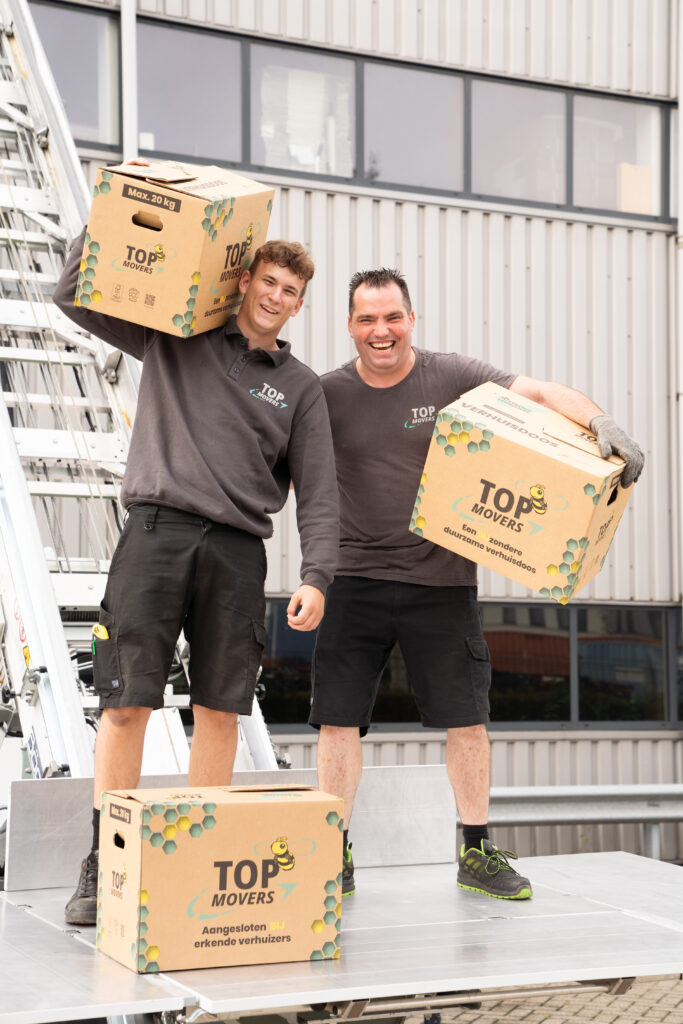
In addition to these international quality marks, it is relevant in the Netherlands to look for membership of Top Movers, the industry organization for certified movers. Recognized members meet national quality requirements and are bound by a code of conduct. We are proud members of both Top Movers and the international FIDI and IAM networks — a combination that demonstrates we meet the highest standards both nationally and internationally.
What is the difference between FIDI FAIM, IAM, and national quality marks?
The most important difference is the scope and depth of the assessment. FIDI FAIM is an independently audited quality certificate with strict operational standards. IAM is primarily an industry membership with a strong networking element. National quality marks such as the Erkend Verhuizer designation are country-specific and focused on compliance with local laws, regulations, and industry agreements.
FIDI FAIM distinguishes itself because the audit is conducted by an independent third party. This makes the quality mark objectively verifiable. A company cannot simply claim to be FIDI FAIM-certified; it must demonstrate this through documentation, processes, and customer feedback. The audit covers, among other things, packaging standards, damage handling procedures, and staff qualifications.
IAM membership offers a different but complementary value. The network of IAM members is active worldwide, meaning that an IAM member in the Netherlands works with reliable agents in, for example, the United States, Australia, or the Middle East. This is crucial for worldwide relocations where coordination takes place at multiple locations simultaneously.
National quality marks complement this with local relevance. In the Netherlands, the Erkend Verhuizer designation guarantees that a company complies with rules regarding working conditions, vehicle safety, and consumer protection. For a move within Europe or from the Netherlands to abroad, the combination of a national quality mark and an international certificate provides the strongest guarantee.
How do you check whether a moving company’s quality mark is still valid?
You can verify the validity of a quality mark through the official websites of the certifying bodies. FIDI publishes an up-to-date list of certified companies on its website. IAM does the same for its members. For Dutch quality marks, you can consult the member list of Top Movers. When in doubt, always ask the moving company directly for proof of certification.
A quality mark that was once obtained is not automatically still valid. FIDI FAIM certification must be periodically renewed through re-audit. This means that a company that was certified five years ago must have been reassessed since then. So check not only whether a company holds a quality mark, but also when it was last audited.
Practically speaking, there are three ways to verify this:
- Look up the company in the member list on the official FIDI or IAM website
- Ask the moving company for a copy of the current certificate with date
- Check whether the company is listed on the Top Movers Netherlands website
A reliable moving company shares this information without hesitation. If a company remains vague about its certification status, that in itself is a signal to be cautious about.
Why does a quality mark offer more assurance than Google reviews alone?
Google reviews are subjective, unverifiable, and can be manipulated. A quality mark, on the other hand, is based on independent assessment of processes, procedures, and quality standards. The difference is fundamental: a review tells you what a customer thought, while a quality mark proves what a company structurally does and delivers.
Reviews are valuable as a first impression, but they have limitations. One bad experience can harm an otherwise excellent company, while a company with many positive reviews may still have structural shortcomings that only come to light during a complex international move. With international relocation, the risks are greater and the consequences of mistakes are more significant than with a domestic move.
A quality mark such as FIDI FAIM covers aspects that no Google review can assess: the accuracy of customs documentation, the quality of packaging materials, the procedures for handling damage, and the financial stability of the company. These are precisely the factors that determine whether your household goods arrive undamaged and on time.
The ideal situation is a moving company with both strong reviews and current quality marks. But if you have to choose which signal to trust more when making an international move, an independently audited quality mark offers a more objective and in-depth guarantee than customer experiences alone.
What insurance should a certified international moving company offer?
A certified international moving company standardly offers a transport insurance policy that covers your household goods during transit. In addition, a professional company should have a liability insurance policy for damage caused during the move. Always ask explicitly about the extent of coverage, the excess, and whether valuable or fragile items need to be additionally covered.
There are two types of insurance relevant to an international move:
- Transport insurance (contents insurance during transport): Covers damage to your belongings during transport, regardless of the cause. Coverage can range from all-risk to limited coverage, depending on the chosen package.
- Liability insurance of the moving company: Covers damage caused by the moving company itself, for example to walls, floors, or furniture during loading or unloading.
Certified companies are transparent about their insurance terms and record these in writing in the moving agreement. Pay attention to the valuation method: some insurance policies reimburse on the basis of current value, others on the basis of replacement value. For antique furniture, art, or electronics, it is advisable to have an appraisal report drawn up in advance.
Also ask whether the moving company has its own claims procedure and how quickly claims are processed. FIDI FAIM-certified companies are required to maintain a transparent and timely claims procedure, which protects you as a customer if something does go wrong.
Does a moving company to Spain need to hold specific quality marks?
There are no legally required quality marks in Spain specifically for international moving companies operating routes to Spain. What is essential, however, are international quality marks such as FIDI FAIM and IAM, combined with demonstrable knowledge of Spanish import rules, customs procedures, and regional requirements. Experience with the Netherlands–Spain route is at least as important as a certificate on paper.
The Netherlands–Spain route, and specifically the Andalusia region, is one of the busiest moving corridors for Dutch emigrants, expats, and retirees. Thousands of Dutch nationals move to this region every year, and the complexity of such a move requires specific expertise. Think of correctly drawing up an inventory list for customs, knowledge of applicable import duties, and the correct documentation for taking a vehicle along.
We have our own branch in Malaga, from which we directly serve the Andalusia region. Our own customs declarants guide the complete import process, including applying for a vehicle import exemption as part of your household goods shipment. That is a concrete advantage that goes beyond any quality mark: local presence and in-depth knowledge of the specific rules at the destination.
When moving to Spain, therefore, check not only whether a company is certified, but also whether it has demonstrable experience with Spanish customs procedures, whether it has a local network or branch in Spain, and whether it can explain which documents you as a customer need to provide. A quality mark is the starting point; specific expertise on the route is the deciding factor.
Veelgestelde vragen
Hoe lang duurt het voordat een verhuisbedrijf een FIDI FAIM-certificering behaalt?
Het behalen van een FIDI FAIM-certificering is een intensief proces dat doorgaans meerdere maanden tot een jaar in beslag neemt. Een verhuisbedrijf moet intern alle processen documenteren, medewerkers opleiden en een onafhankelijke audit doorstaan op meer dan honderd kwaliteitscriteria. Dit maakt het certificaat zo waardevol: bedrijven die het hebben, hebben aantoonbaar geïnvesteerd in structurele kwaliteitsborging en niet slechts in een papieren certificaat.
Wat moet ik doen als mijn verhuisbedrijf schade claimt niet te vergoeden ondanks een geldig keurmerk?
Leg alle schade direct bij aankomst schriftelijk vast met foto’s en meld dit binnen de termijn die in de verhuisovereenkomst staat vermeld. FIDI FAIM-gecertificeerde bedrijven zijn contractueel verplicht een transparante en tijdige schadeprocedure te hanteren; als een bedrijf hier niet aan voldoet, kun je dit melden bij FIDI zelf via hun klachtenkanaal. Als lid van Top Movers is het bedrijf bovendien gebonden aan een gedragscode en kun je ook bij de brancheorganisatie terecht voor bemiddeling.
Is een internationaal verhuisbedrijf met alleen IAM-lidmaatschap maar zonder FIDI FAIM voldoende betrouwbaar?
IAM-lidmaatschap is een positief signaal, maar het is primair een netwerklidmaatschap en geen onafhankelijk geauditeerd kwaliteitscertificaat zoals FIDI FAIM. Voor een eenvoudigere internationale verhuizing kan een IAM-lid voldoende zijn, maar bij complexe verhuizingen naar landen met strenge douaneprocedures — zoals een verhuizing vanuit Nederland naar Spanje of buiten Europa — biedt de combinatie van IAM én FIDI FAIM de sterkste garantie. Vraag bij een puur IAM-lid altijd om referenties en concrete ervaring met jouw specifieke route.
Hoe ver van tevoren moet ik een internationaal verhuisbedrijf inschakelen?
Voor een internationale verhuizing is het verstandig om minimaal zes tot twaalf weken van tevoren contact op te nemen met een gecertificeerd verhuisbedrijf. Dit geeft voldoende tijd voor een nauwkeurige inventarisatie, het aanvragen van de benodigde douanedocumentatie en het plannen van de verhuisdatum. In drukke periodes zoals zomer en begin van het schooljaar is de capaciteit van gecertificeerde bedrijven snel volgeboekt, dus eerder plannen is altijd beter.
Dekt mijn bestaande inboedelverzekering ook schade tijdens een internationale verhuizing?
De meeste standaard inboedelverzekeringen dekken geen schade die ontstaat tijdens een (internationale) verhuizing, of bieden slechts zeer beperkte dekking voor een korte periode. Het is essentieel om dit vooraf te controleren bij je verzekeraar en indien nodig een aanvullende transportverzekering af te sluiten via het verhuisbedrijf. Vraag specifiek of de dekking allrisk is of beperkt, wat het eigen risico bedraagt en of bijzondere items zoals kunst, antiek of elektronica aanvullend verzekerd moeten worden.
Kan ik een deel van mijn verhuisgoed zelf inpakken om kosten te besparen, en heeft dat gevolgen voor de verzekering?
Ja, je kunt zelf inpakken om kosten te besparen, maar dit heeft vrijwel altijd gevolgen voor de verzekeringsdekkingsdekking. Schade aan items die je zelf hebt ingepakt, valt bij de meeste verhuisbedrijven buiten de transportverzekering, omdat het verhuisbedrijf geen controle heeft gehad over de verpakkingskwaliteit. Bespreek dit vooraf expliciet met je verhuisbedrijf en vraag schriftelijk vast te leggen welke items professioneel zijn ingepakt en welke niet, zodat er bij een eventuele claim geen onduidelijkheid bestaat.
Wat zijn de meest gemaakte fouten bij het kiezen van een internationaal verhuisbedrijf?
De meest voorkomende fout is kiezen op basis van de laagste prijs zonder de keurmerken en ervaring van het bedrijf te controleren. Andere veelgemaakte fouten zijn het niet controleren of een keurmerk nog actueel en geldig is, het nalaten om de verzekeringsvoorwaarden te lezen vóór ondertekening, en het onderschatten van het belang van lokale kennis op de bestemming. Een gecertificeerd bedrijf met aantoonbare ervaring op jouw specifieke route biedt uiteindelijk meer zekerheid dan een goedkopere aanbieder zonder verificeerbare kwaliteitsgaranties.
Gerelateerde artikelen
- What is a realistic budget for an office relocation of 50+ employees?
- How do you weigh price versus quality for a business relocation?
- What is the difference between a moving allowance and a relocation package?
- Can you temporarily store your household goods when moving back from Spain?
- How do you transport your car when moving back from Spain to the Netherlands?
- Meubelpaspoort bij kantoorverhuizing: zo behoud je inzicht in de waarde van je inventaris
- Road transport or sea transport back to the Netherlands: which is cheaper?
- Wat is de impact van een bedrijfsverhuizing op de productiviteit?
- Hoe ga je om met archieven en documenten bij een bedrijfsverhuizing?
- Hoe informeer je klanten over een bedrijfsverhuizing?
- Welke documenten heb je nodig voor een verhuizing van Spanje naar Nederland?
- Wat is een relocatie-allowance bij een verhuizing naar het buitenland?
- Welke documenten heb je nodig om naar Spanje te emigreren?
- Wat zijn de meest gemaakte fouten bij emigreren naar Spanje?
- Hoe lang duurt het voordat je spullen aankomen na een internationale verhuizing?